"Come Back to The Harbor©"
Lyrics by M. S. McKenzie | Performed by Songs Across America, Protected by Copyright
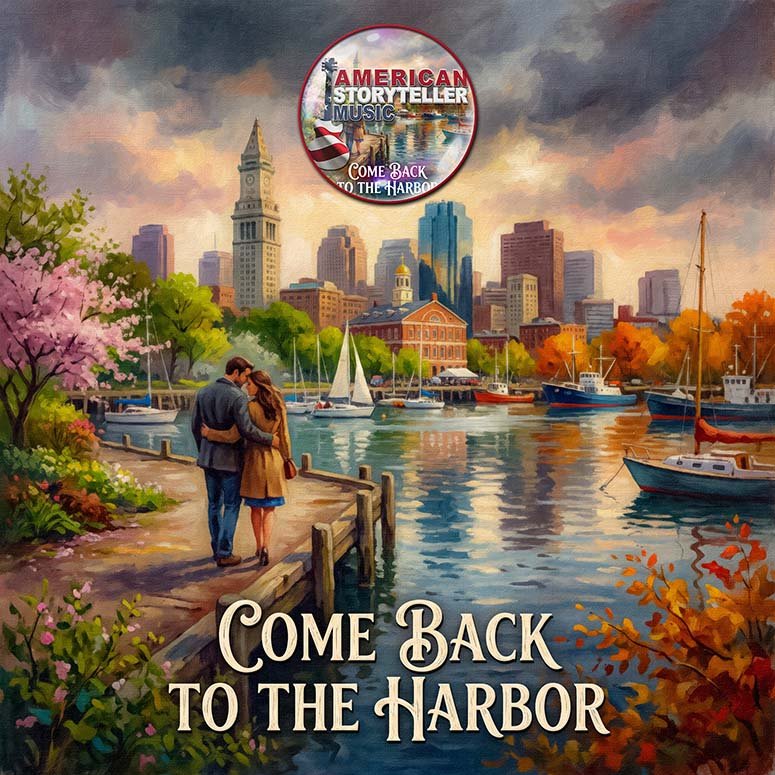
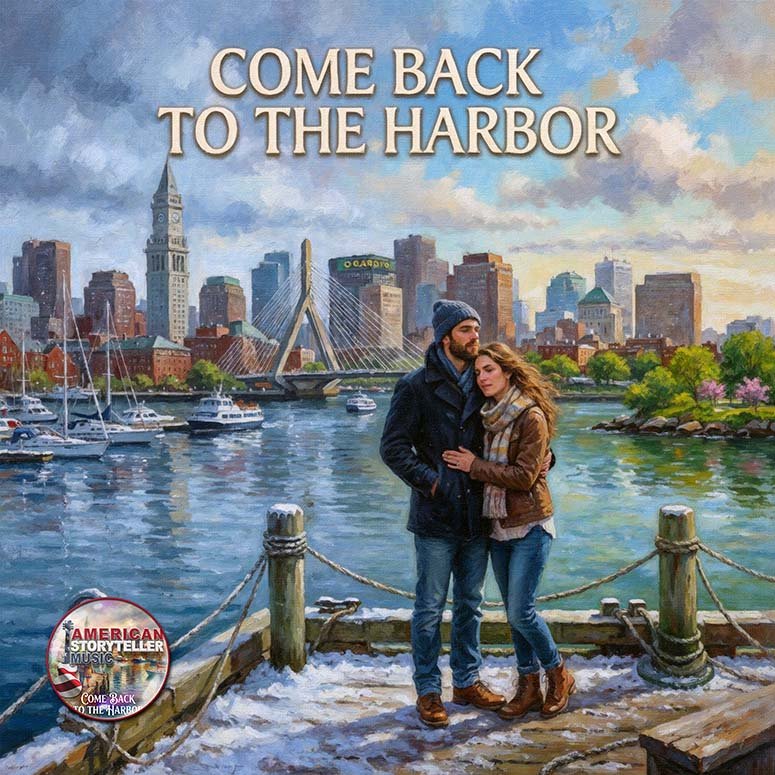
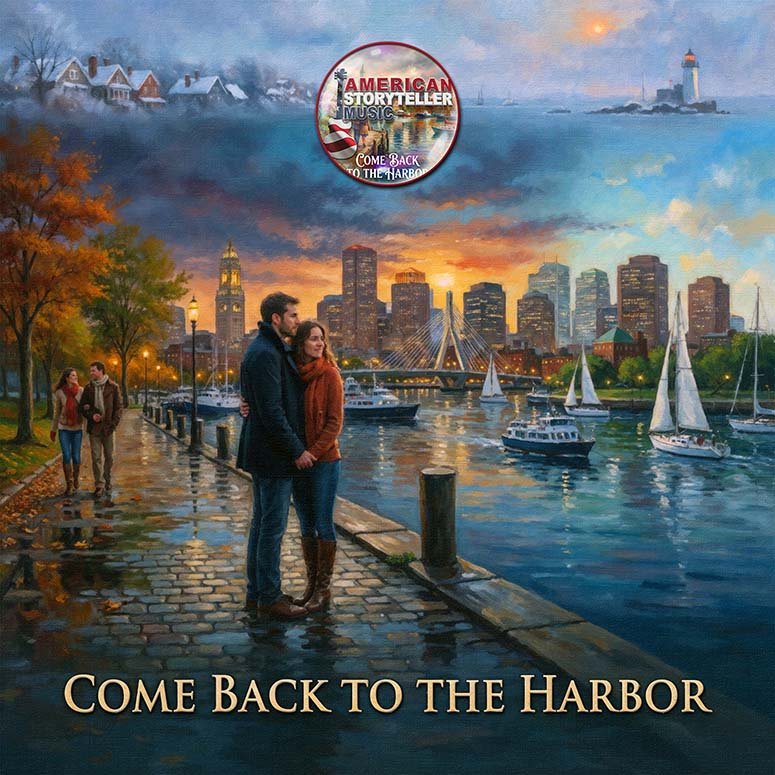

"Come Back to The Harbor"
Original Song Lyrics: Written by M. S. McKenzie, All Rights Reserved
[Instrumental Intro]
[Verse 1]
I heard your voice on the telephone
Soft as the rain against my window
You said you'd been driving through the City alone
With nowhere you really had to go…
You asked if I remembered that summer
When we stayed out beneath the harbor lights
I said some things are harder to forget
No matter how hard you try
The room was quiet for a moment
Like the whole world held its breath
Then you laughed the way you used to
And pulled me back in your arms again
[Pre-Chorus]
We keep walking away
We keep turning around
Every time we lose each other
We come running back somehow
[Chorus]
Come back to the Harbor
Come back into my arms tonight
We've been thunder over Boston
We've been on fire beneath city lights
Come back to the harbor
To where your restless heart called home
We may never make it easy
But I don't know how to let you go….
[Instrumental Turnaround]
[Verse 2]
We could make a storm from nothing
Turn a whisper into World War Three
You would slam the door in Cambridge
I would swear that you were done with me
Then I'd find you near the water
With the wind caught in your hair
Looking out across the Harbor
Like you knew I'd find you there
We were reckless in November
We were perfect every June
We made promises in Provincetown
Then broke them far too soon
[Pre-Chorus]
We keep drawing the line
Then we cross it again
Every ending leaves the doorway
Open just enough to let us in
[Chorus]
Come back to the Harbor
Come back into my arms tonight
We've been thunder over Boston
We've been on fire beneath city lights
Come back to the Harbor
To where your restless heart called home
We may never make it easy
But I don't know how to let you go….
[Instrumental Breakdown]
[Bridge]
Maybe love was never meant
To live inside those lines
Maybe we were always running
Half a step behind the times
You still keep my old blue sweater
I still take the coastal road
Past the dunes and weathered houses
Where we almost found our home
And sometimes when the fog rolls in
Across the Cape at night
I swear I see your shadow
In the sweep of Highland Light
[Breakdown Chorus]
Come back to the Harbor
Even if it's only for tonight
[Background Vocals]
Come back
Come back
[Lead Vocal]
Let me hold you through the silence
Before the morning changes your mind
[Background Vocals]
Don't go
Don't go
[Lead Vocal]
We've been wrong in every season
But something in me still believes
[Full-Band Build]
That every road you take without me
Brings you closer back to me
[Final Chorus]
Come back to the Harbor
Come back into my arms tonight
We've been thunder over Boston
We've been on fire beneath city lights
Come back to the Harbor
Let the past fall where it may
We may never make forever
But I still need you here today
Come back to the Harbor
Where the restless water meets the shore
I know loving you can break me
But I keep coming back for more…
[Post-Chorus]
Coming back
Coming back
Coming back to the Harbor
Coming back
Coming back
Though we know how this will end..
[Instrumental Outro]
Song Description
"Come Back to the Harbor" is a sweeping adult contemporary pop-rock ballad about a passionate, unstable relationship that repeatedly falls apart and finds its way back together. Set against Boston Harbor, Cambridge, Provincetown, Cape Cod, and Highland Light, the song uses the Massachusetts coastline as both a literal setting and an emotional landscape. The harbor becomes a symbol of refuge, memory, return, and the impossible hope that two restless people might finally find a place where their love can remain still.
At its heart, the song tells the story of two people who are deeply connected but fundamentally unable to make their relationship easy. They argue, separate, make promises, break them, and continue circling back toward one another. Their love is not presented as peaceful or dependable. It is volatile, magnetic, exhausting, and difficult to escape. The narrator understands that the relationship may never become permanent, yet emotional understanding does not weaken the desire to try again. That tension gives the song its central power: the lovers know how the story usually ends, but they cannot stop returning to its beginning.
The instrumental introduction creates space for the listener to enter the song's reflective atmosphere before the story begins. Depending on the arrangement, it could evoke a rainy Boston evening through warm electric piano, clean guitar, atmospheric synthesizer, distant saxophone, or restrained strings. The absence of lyrics allows the emotional setting to form first, as though the listener is looking through a rain-streaked window while city lights blur in the distance.
The first verse begins with a telephone call, immediately establishing separation. The narrator hears the former lover's voice described as "soft as the rain against my window," an image that creates intimacy while emphasizing physical distance. Rain often symbolizes longing, memory, and emotional vulnerability, and here it softens the caller's return. The voice does not arrive with a dramatic apology or declaration. It comes quietly, almost cautiously, testing whether the connection between them is still alive.
The caller has been driving alone through the city with no clear destination. This detail introduces one of the song's most important ideas: restlessness. The lover is moving but not progressing, surrounded by streets and lights yet emotionally directionless. The drive through Boston becomes an outward expression of an inner state. The caller may not know where to go physically, but the telephone call reveals where the heart instinctively turns.
The question about the summer beneath the harbor lights pulls both characters backward into shared memory. The harbor is first introduced not merely as a scenic location but as the birthplace of emotional intimacy. Their time together beneath those lights has survived every argument and separation. The narrator's response, "some things are harder to forget, no matter how hard you try," suggests that both people have made deliberate attempts to move on. Forgetting has become an act of resistance, but memory remains stronger.
The silence that follows is one of the verse's most emotionally effective moments. The room becomes so quiet that it feels as though the entire world is holding its breath. This pause captures the uncertainty between reconciliation and retreat. Neither person knows what the other will say next. When the caller laughs in the familiar way, that sound collapses the emotional distance between them. The narrator feels pulled "back in your arms again," even though the contact is only through the telephone. Memory and desire are powerful enough to recreate physical closeness before any reunion has taken place.
The first pre-chorus summarizes the recurring pattern of the relationship. The couple repeatedly walks away, turns around, loses one another, and returns. The repetition of "we keep" suggests that this is not a single breakup but an established cycle. Their reunions seem almost involuntary. No matter how decisively they separate, something draws them back.
The chorus transforms the harbor into a direct invitation. "Come back to the Harbor" means return to the physical waterfront, but it also means return to the emotional space the couple once shared. The request to "come back into my arms tonight" makes the appeal immediate and personal. The narrator is not asking for a carefully planned future. The plea is for closeness now, even if tomorrow remains uncertain.
The line "We've been thunder over Boston" gives the relationship a dramatic scale. Their conflicts are compared to storms rolling across the city, loud enough to dominate the emotional skyline. By contrast, "on fire beneath city lights" evokes passion, nightlife, attraction, and moments when the relationship felt unstoppable. Thunder and fire are both powerful but difficult to control. Together they characterize the couple's love as elemental, brilliant, and dangerous.
The phrase "where your restless heart called home" reveals why the harbor matters so deeply. The lover may be unable to remain in one place emotionally, yet the harbor represents one place where that restless heart once felt anchored. Home is not defined by a house, a marriage, or lasting stability. It is defined by recognition, history, and the rare sensation of being fully known by another person.
The final two lines of the chorus state the central conflict plainly. The narrator accepts that the relationship may never become simple, but still cannot let go. This honesty prevents the song from becoming an idealized love story. The narrator is not claiming that the couple belongs together because everything works. The narrator is admitting that they remain emotionally bound despite evidence that the relationship may continue to hurt them.
The instrumental turnaround after the chorus provides a moment for the emotional appeal to settle. It can also reintroduce a melodic hook associated with the words "come back to the Harbor," strengthening the song's sense of place and longing.
The second verse explores the couple's volatility more directly. They can create a storm from nothing and turn a whisper into "World War Three." These exaggerated images communicate how quickly minor disagreements become major conflicts. The phrase also introduces a note of self-awareness. The narrator recognizes the absurdity of their arguments, even while acknowledging how destructive they become.
The Cambridge door-slamming scene gives the conflict a specific urban setting. Cambridge, with its streets, apartments, universities, and proximity to the Charles River and Boston, feels both intellectual and intimate. Yet within this setting, communication collapses into anger. One lover slams the door, while the other declares the relationship finished. These gestures sound final, but the rest of the verse shows that finality never lasts.
The narrator later finds the lover near the water, wind moving through their hair as they look across the harbor. The scene is cinematic and emotionally revealing. The lover has gone to the place connected to their shared history, perhaps consciously waiting to be found. The line "Like you knew I'd find you there" suggests an unspoken ritual. Even their disappearances contain directions back to one another.
The seasonal imagery deepens the song's emotional structure. The couple is "reckless in November" and "perfect every June." November suggests cold, fading light, approaching winter, and emotional instability. June suggests warmth, possibility, long evenings, and the beginning of summer. Their relationship changes with the seasons, thriving in moments of freedom and collapsing when reality becomes colder or more demanding.
The Provincetown reference broadens the song beyond Boston and gives the relationship a Cape Cod history. Provincetown is associated with dunes, ocean light, art, freedom, summer escape, and the feeling of being at the farthest edge of the mainland. Promises made there would naturally feel romantic and removed from ordinary life. The tragedy is that those promises are broken "far too soon," suggesting that they could survive within the dreamlike atmosphere of the Cape but not under the pressures of everyday life.
The second pre-chorus uses the image of boundaries. The couple repeatedly draws lines and then crosses them. These may be emotional limits, declarations that the relationship is over, or promises not to return. Yet each ending leaves the doorway partly open. The image of the doorway connects back to the slammed door in Cambridge, suggesting that even their most dramatic exits never fully close the relationship.
The second chorus repeats the invitation, but its meaning is now heavier. The listener has seen how destructive the cycle can be, so the plea to return carries both hope and danger. The harbor remains a sanctuary, but it may also be the setting where the cycle begins again.
The instrumental breakdown gives the arrangement room to expand emotionally. A saxophone solo, expressive electric guitar, piano-led interlude, or combination of guitar and strings could reflect the relationship's mixture of urban romance and coastal melancholy. This section can also prepare the transition from storytelling into the more introspective bridge.
The bridge steps away from specific arguments and asks whether the couple's failure came partly from trying to force their love into conventional expectations. "Maybe love was never meant to live inside those lines" suggests that the relationship could not survive rigid definitions, schedules, promises, or traditional ideas of permanence. The lovers may have been trying to make their connection fit a form it was never suited to occupy.
The idea that they were "half a step behind the times" adds another layer of regret. They may repeatedly realize what they need only after the opportunity has passed. Their timing is always slightly wrong. One wants closeness when the other needs distance. One is ready to commit when the other is already leaving. Their love may be real, but emotional synchronization remains beyond their reach.
The old blue sweater is a small but powerful symbol. The former lover still possesses something intimate and ordinary that belonged to the narrator. Unlike the grand imagery of storms and city lights, the sweater is tangible, domestic, and quietly personal. It suggests that the lover has not completely erased the narrator from daily life.
The narrator's coastal drive reveals a parallel ritual. Just as the lover returns to the harbor, the narrator continues to travel the road past dunes and weathered houses. The landscape is connected to the future they nearly created together. The phrase "where we almost found our home" may refer to a literal house, but it also represents the moment when stability seemed possible. The word "almost" carries the full weight of their history. They came close enough to imagine permanence, but not close enough to keep it.
The appearance of Highland Light gives the bridge one of its strongest visual symbols. Located on Cape Cod, the lighthouse becomes a beacon through fog, uncertainty, and distance. When the narrator imagines seeing the lover's shadow within its sweeping beam, memory becomes almost supernatural. The light briefly reveals what is otherwise hidden, just as certain places and moments suddenly make the lost relationship feel present again.
The breakdown chorus strips the central plea to its most vulnerable form. The narrator no longer asks for a permanent return, only for one night. This concession reveals how far the expectations have fallen. The narrator is willing to accept temporary closeness because complete separation feels unbearable.
The background vocals create an internal dialogue. "Come back" reflects desire, while "don't go" exposes fear. The call-and-response structure can make the section feel as though the narrator's private thoughts are surrounding the lead vocal. It also gives the song a strong live-performance quality, inviting the arrangement to build gradually from restraint into emotional release.
The line "Let me hold you through the silence before the morning changes your mind" captures the temporary nature of their reunions. Night allows honesty, memory, and physical closeness, while morning brings doubt, logic, and departure. Silence is not empty here. It is a fragile space in which the couple does not argue, define, or promise anything. They simply remain together before daylight restores the complications they have been trying to escape.
The admission that they have "been wrong in every season" acknowledges that neither summer perfection nor winter distance has solved their problems. Still, the narrator believes that every road the lover travels eventually curves back toward the relationship. This idea connects the city driving in the first verse with the coastal road in the bridge. Roads throughout the song represent attempted escape, but they also form pathways of return.
The full-band build should make this realization feel emotionally inevitable. Drums, bass, guitars, piano, strings, and background harmonies can rise together as the narrator moves from uncertainty into renewed conviction. The build does not prove that the couple will succeed. Instead, it demonstrates how completely hope has reclaimed the narrator.
The final chorus introduces subtle lyrical changes that show emotional growth and resignation. "Let the past fall where it may" suggests a willingness to stop relitigating every argument and disappointment. The narrator is prepared to accept the history without resolving it.
The line "We may never make forever, but I still need you here today" is the emotional thesis of the final chorus. The narrator no longer insists that love must guarantee permanence. Forever may be impossible, but present closeness still has meaning. This idea is romantic and painful at the same time, because it accepts the possibility that the relationship cannot provide security.
The final image of restless water meeting the shore perfectly captures the two lovers. Water is always moving, while the shore remains in place, receiving and releasing each wave. The relationship functions in the same way. One person may be the restless traveler, the other the waiting harbor, but both are altered by the repeated contact.
The confession "I know loving you can break me, but I keep coming back for more" removes any remaining illusion. The narrator understands the danger. This is not innocence or ignorance but conscious surrender to an attachment that has survived reason, conflict, and repeated heartbreak. The line gives the final chorus its greatest emotional intensity because love is presented as both nourishment and damage.
The post-chorus turns the idea of return into a repeated mantra. "Coming back" can refer to the lover, the narrator, or both. Neither person is truly outside the cycle. Even when one appears to leave and the other appears to wait, they are both returning emotionally through memory, roads, familiar objects, and shared places.
The closing phrase, "Though we know how this will end," prevents the final section from becoming falsely triumphant. The couple may reunite, but they have not solved the forces that repeatedly separate them. The song ends with awareness rather than resolution. They know the pattern, predict the heartbreak, and return anyway.
The instrumental outro can extend this ambiguity. Rather than ending with a dramatic final chord, the music could gradually recede through piano, guitar, saxophone, or a distant repetition of the main melodic theme. The effect should feel like harbor lights fading into fog or a car continuing down a coastal road after midnight. A lingering unresolved chord could reinforce the sense that the relationship's story has not truly ended.
Musically, "Come Back to the Harbor" would be especially effective as a late-1970s or early-1980s-inspired adult contemporary pop-rock ballad with cinematic coastal atmosphere. Warm electric piano, acoustic guitar, clean electric guitar, melodic bass, live drums, subtle synthesizer pads, strings, and a restrained saxophone could give it a sophisticated urban sound. The verses should remain intimate and conversational, while the choruses open into broader drums, layered guitars, and expansive background vocals.
The first chorus could be strong but controlled, allowing later sections room to grow. The second chorus could add harmony and rhythmic intensity. The breakdown chorus should begin sparsely, perhaps with piano and lead vocal, before background singers answer with "come back" and "don't go." From there, the arrangement could build steadily into a final chorus with full drums, soaring harmonies, sustained electric guitar, strings, and a prominent melodic counter line.
The lead vocal should carry maturity, restraint, and emotional weariness rather than youthful innocence. The narrator has lived through this cycle many times and understands its consequences. A slightly weathered male vocal, expressive female alto, or carefully blended duet arrangement could suit the material. A duet would be particularly interesting because the background responses could be assigned to the returning lover, making the song feel like a conversation rather than a solitary plea.
Geographically, the song is deeply rooted in Massachusetts, but its emotional meaning is universal. Boston provides urban energy and conflict. Cambridge represents domestic confrontation and intellectual tension. Provincetown represents summer promises and escape. Cape Cod represents memory, distance, and the nearly achieved dream of home. Highland Light becomes a beacon through uncertainty, while the harbor ties every setting together as the place where movement finally meets shelter.
Ultimately, "Come Back to the Harbor" is a song about the difference between knowing a relationship is unstable and being able to leave it behind. It captures the particular ache of loving someone who feels like home but cannot remain there. The narrator is not asking for certainty, perfection, or even forever. The request is simply for one more return, one more night beneath the harbor lights, and one more chance to believe that two people who repeatedly lose each other might still find their way back.




















.jpg)