

Missouri: The Way Westward
- Introduction
- Driving Route 66 Across Missouri
- Major Route 66 Towns and Stops in Missouri
- Classic Roadside Stops, Oddities, and Photo Ops
- Historic, Cultural, and Scenic Attractions
- Diners, Dives, Cafes, and Road Food
- Where to Stay Along the Route
- Worthwhile Side Trips and Short Detours from Missouri Route 66
- Major Side Trips Worth the Detour
- Off the Beaten Path in Missouri
- Traveler Notes
Introduction
Missouri is where Route 66 begins to feel less like a historic road and more like a journey into the American interior. After the Mississippi River crossing, the route pushes through St. Louis, slides into the rolling Ozarks, and moves through a chain of small towns, old tourist courts, caves, bridges, diners, neon signs, murals, forests, river valleys, and roadside oddities. Illinois gives travelers the opening chapter, but Missouri gives the road a deeper personality: a little rugged, a little theatrical, a little haunted by history, and very fond of telling you that Jesse James may have been somewhere nearby.
This stretch is one of the most varied sections of Route 66. It includes a major city, river crossings, historic motels, Ozark hills, cave country, old steel bridges, small-town murals, vintage drive-ins, courthouse squares, and some of the best-preserved Route 66 architecture in the Midwest. Missouri also has a slightly wilder feel than Illinois. The road bends more. The hills rise. The forests close in. The towns feel more tucked into the landscape. By the time travelers reach Springfield, Carthage, and Joplin, Route 66 has fully left its urban starting point behind and is pointing toward the Great Plains, Oklahoma, Texas, and the wide-open West.
Driving Route 66 Across Missouri
Historic Route 66 in Missouri runs generally southwest from the St. Louis area to the Kansas border near Joplin. Depending on the alignments followed, the Missouri section covers roughly 317 miles. The route enters the state from Illinois near the Mississippi River, passes through St. Louis and its suburbs, then continues through communities such as Eureka, Pacific, St. Clair, Sullivan, Bourbon, Cuba, Rolla, St. Robert, Waynesville, Lebanon, Conway, Marshfield, Springfield, Halltown, Carthage, Webb City, and Joplin.
Missouri is not a simple straight-line drive. The route has multiple alignments, urban fragments, frontage-road sections, small-town main streets, old bridges, and stretches that run near or parallel to Interstate 44. In places, the interstate will try to seduce you with speed and convenience. Resist when possible. The older road is where the character lives. The interstate may get you there faster, but Route 66 was never really about saving time. If it were, half of its best attractions would never have existed because no one would have stopped long enough to build a giant rocking chair, a neon motel, or a cave empire based partly on outlaw folklore.
Missouri deserves at least two days, and three is better if travelers want to explore St. Louis, Meramec Caverns, Cuba, Rolla, Lebanon, Springfield, Carthage, and Joplin without turning the trip into a blur of windshield glass and fast-food wrappers. The eastern part of the route has strong city and river history, the middle section leans into Ozark scenery and roadside tourism, and the western section offers some of Missouri's best preserved Route 66 architecture and classic Americana.
Major Route 66 Towns and Stops in Missouri
St. Louis
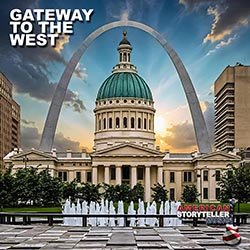
St. Louis is the great Mississippi River gateway on Missouri Route 66. For westbound travelers coming from Illinois, the city is a major transition point: the industrial river city, the symbolic Gateway to the West, and the beginning of the Missouri stretch of the Mother Road. Route 66 moved through St. Louis on different alignments over time, and the modern traveler will find a mix of historic roads, city neighborhoods, old commercial corridors, major attractions, and urban complexity. This is not a quaint small-town Route 66 stop. It is a real city, with all the rewards and headaches that come with that.
- What to See: Gateway Arch National Park, the Old Courthouse area, Ted Drewes Frozen Custard, historic Route 66 alignments, Forest Park, the Missouri History Museum, and classic St. Louis neighborhoods.
- Why It Matters: St. Louis anchors Missouri's Route 66 story and connects the Mother Road to Mississippi River commerce, westward expansion symbolism, urban migration, baseball, blues, brick architecture, and old highway corridors.
- Traveler Tip: Treat St. Louis as a major city stop, not a casual pull-off. Plan parking, timing, and neighborhoods carefully. Route 66 romance is lovely, but it will not magically find you a parking space downtown.
Ted Drewes Frozen Custard, St. Louis
Ted Drewes is one of the great St. Louis food rituals and a natural Route 66 stop. Known for frozen custard so thick it can be served upside down, it is exactly the kind of place road travelers love: local, famous, crowded, slightly chaotic, and completely uninterested in being subtle. It is not a full meal unless your nutrition plan was written by a nine-year-old, but it is one of the classic Route 66 food experiences in Missouri.
- What to See: The Chippewa Street location, the crowds, the neon, and the famous frozen custard "concretes."
- Why It Matters: Ted Drewes is one of the best-known surviving Route 66-associated food stops in St. Louis.
- Traveler Tip: Expect lines at busy times. The crowd is part of the experience, even if your patience disagrees.
Eureka and Route 66 State Park
Eureka sits southwest of St. Louis and offers one of Missouri's more complicated Route 66 stories. Route 66 State Park preserves part of the corridor near the former town of Times Beach, a community evacuated after a major dioxin contamination disaster. That history gives the park a strange and sobering quality. On the surface, it is a pleasant place for trails, visitor information, and a break from driving. Underneath, it is a reminder that not every Route 66 story is neon and nostalgia. Some are environmental, political, and painful.
- What to See: Route 66 State Park, visitor center exhibits, trails, Meramec River scenery, and nearby historic road alignments.
- Why It Matters: This area connects Route 66 to environmental history, abandoned communities, and the changing relationship between roads, towns, and land use.
- Traveler Tip: This is worth more than a quick restroom stop. Read the history. It adds depth to the Missouri drive.
Pacific
Pacific is an early Ozark foothills stop west of St. Louis, with a strong Route 66 identity and a landscape that begins shifting away from the urban edge. The Red Cedar Inn, originally opened in the 1930s, is one of the notable historic sites associated with the road. Pacific also gives travelers a sense of how quickly Missouri Route 66 begins to change after leaving the city: the terrain rises, the road curves, and the old highway begins to feel less like a corridor and more like a passage through hills and river country.
- What to See: Red Cedar Inn site, Route 66 markers, downtown Pacific, nearby Meramec River scenery, and the beginning of the Ozark foothills feel.
- Why It Matters: Pacific helps mark the transition from metropolitan St. Louis into the more rural, wooded, and winding Missouri section of Route 66.
- Traveler Tip: This is a good place to start slowing down after St. Louis. The road west of here rewards attention.
St. Clair and Sullivan
St. Clair and Sullivan are classic Missouri Route 66 corridor towns, with old motels, roadside businesses, cafes, and access to cave country. Sullivan, in particular, works well as a practical stop for travelers exploring Meramec Caverns and the surrounding Ozark landscape. This part of Missouri is where the route starts to feel properly road-trip flavored: old signs, woods, curves, river valleys, and enough cave advertising to make you wonder whether every hill in Missouri has a gift shop underneath it.
- What to See: Historic Route 66 alignments, small-town commercial strips, nearby cave attractions, old motel remnants, and local diners.
- Why It Matters: These towns represent the service-and-stop rhythm of Missouri Route 66 between St. Louis and the central Ozarks.
- Traveler Tip: This is a useful stretch for fuel, food, and cave-country side trips. Keep an eye out for older signs and surviving roadside architecture.
Stanton and Meramec Caverns
Meramec Caverns is one of the most famous roadside attractions in Missouri, and it has long been associated with Route 66 travel. The caves themselves are impressive, but the real Route 66 element is the marketing: billboards, outlaw legends, Jesse James stories, and the old American habit of turning geology into a roadside empire. It is part natural wonder, part tourist theater, and part proof that no cave in America is truly complete until someone has tried to connect it to a famous criminal.
- What to See: Cave tours, underground formations, Meramec River scenery, historic roadside advertising legacy, and nearby campgrounds or river recreation.
- Why It Matters: Meramec Caverns is one of the classic Route 66 tourist attractions and a major example of how natural sites were promoted to highway travelers.
- Traveler Tip: Go in with the right attitude. Enjoy the cave, appreciate the showmanship, and accept that Route 66 history often comes with a large helping of theatrical exaggeration.
Cuba
Cuba is one of the strongest Route 66 towns in Missouri. Known as the "Mural City," it combines public art, historic buildings, local restaurants, and one of the great historic motels on the entire route: the Wagon Wheel Motel. Cuba feels like a town that understood the assignment. It offers enough Route 66 character to reward a real stop, not just a drive-by, and its murals help tell local history in a way that makes the town walkable and memorable.
- What to See: Route 66 murals, Wagon Wheel Motel, historic downtown Cuba, local restaurants, and nearby Route 66 roadside stops.
- Why It Matters: Cuba is one of Missouri's best examples of a town using preservation, murals, and historic lodging to keep Route 66 relevant.
- Traveler Tip: Walk around. The murals and small details are easy to miss if you treat Cuba as just another exit.
Fanning
Fanning is best known for one very large object: the giant rocking chair at the Fanning 66 Outpost. Originally promoted as the world's largest rocking chair, it remains one of the classic Missouri Route 66 photo stops. This is not a complicated attraction. It is a huge chair by the road. That is the pitch. And honestly, that is enough. Route 66 has survived for a century partly because it understands that sometimes people just want to stand beside an enormous household object and take a picture.
- What to See: The giant rocking chair, Fanning 66 Outpost area, Route 66 signs, and photo opportunities.
- Why It Matters: It represents the oversized-object tradition of Route 66 roadside promotion.
- Traveler Tip: This is a short stop. Take the photo, stretch your legs, and do not overthink it. The chair certainly didn't.
Rolla
Rolla is a practical and historic stop in central Missouri, long associated with transportation, education, and Route 66 travel. The city has old road alignments, historic downtown buildings, access to nearby natural areas, and proximity to Missouri University of Science and Technology. Rolla is not as outwardly flamboyant as some Route 66 towns, but it is useful, interesting, and well-positioned for travelers moving through the middle of the state.
- What to See: Historic downtown Rolla, Route 66 markers, the old National Bank of Rolla building, nearby parks, and access to Ozark scenery.
- Why It Matters: Rolla served as an important central Missouri community along the Route 66 corridor and remains a practical stop for travelers.
- Traveler Tip: Rolla is a good place for a meal, fuel, or overnight if you are pacing Missouri carefully. It is more useful than flashy, and there is nothing wrong with that.
Devil's Elbow
Devil's Elbow is one of the most scenic and historically interesting stops on Missouri Route 66. Located along the Big Piney River, it is known for its dramatic river bend, old bridge, wooded surroundings, and a name that sounds like it was created by a committee of steamboat captains, moonshiners, and travel writers trying to sell postcards. The area has a more rugged Ozark feel than many other Missouri stops and is one of the better places to understand the landscape Route 66 had to cross.
- What to See: Devil's Elbow Bridge, Big Piney River scenery, bluffs, historic road alignments, and nearby old roadside buildings.
- Why It Matters: Devil's Elbow gives travelers one of the clearest looks at the Ozark terrain and river crossings that shaped Missouri Route 66.
- Traveler Tip: Allow time for photographs and a slower drive. This is one of the places where the scenery, not just the signs, carries the story.
St. Robert and Waynesville
St. Robert and Waynesville sit near Fort Leonard Wood and offer a mix of military presence, Ozark scenery, old Route 66 alignments, and historic downtown character. Waynesville, in particular, has a courthouse-square feel, local history, and access to river scenery. This part of the Missouri route feels more rugged and regional, less curated than the polished Route 66 towns, and that is part of its value.
- What to See: Historic Waynesville, Pulaski County Courthouse area, Route 66 alignments, Big Piney and Gasconade River scenery, and nearby military history.
- Why It Matters: This stretch connects Route 66 with the military, Ozark settlement, river crossings, and small-town central Missouri history.
- Traveler Tip: Do not rush the Devil's Elbow-Waynesville stretch. It is one of Missouri's more atmospheric sections.
Lebanon
Lebanon is one of the classic Missouri Route 66 overnight towns. It has long served travelers moving through the Ozarks, and it offers motels, restaurants, museums, and access to outdoor recreation. The Munger Moss Motel, with its famous neon sign, is one of the key Route 66 lodging icons in Missouri. Lebanon feels like a good midpoint pause: not too big, not too small, and just road-worn enough to remind you that the Mother Road was built for travelers who needed a bed, a meal, and a reason to keep going in the morning.
- What to See: Munger Moss Motel sign, local Route 66 displays, historic commercial corridors, nearby parks, and Ozark scenery.
- Why It Matters: Lebanon was an important service town for Route 66 travelers crossing the Missouri Ozarks.
- Traveler Tip: Lebanon is a strong overnight candidate, especially for travelers who want to divide Missouri into manageable sections.
Conway and Marshfield
Conway and Marshfield continue the westward movement toward Springfield. These towns are not always the loudest Route 66 stops, but they help maintain the rhythm of the road: small communities, local cafes, old alignments, roadside markers, and bits of history scattered between larger destinations. Marshfield has ties to astronomer Edwin Hubble, giving it a scientific claim to fame that is a nice change of pace from the usual lineup of motels, gas stations, and giant objects.
- What to See: Historic town centers, Route 66 alignments, local markers, and Marshfield's Edwin Hubble connections.
- Why It Matters: These towns preserve the quieter travel rhythm between Lebanon and Springfield.
- Traveler Tip: Watch for small details. Not every worthwhile Route 66 stop announces itself with neon and a fiberglass mascot.
Springfield
Springfield, Missouri, is one of the most important Route 66 cities in the country because the name "Route 66" was proposed there in 1926. The city calls itself the Birthplace of Route 66, and this is one of the places where that claim has real substance. Springfield offers museums, murals, historic commercial streets, restaurants, public art, and a growing Route 66 visitor experience. It is also large enough to serve as a practical overnight stop with plenty of lodging and food options.
- What to See: Route 66 Springfield Visitor Center, Birthplace of Route 66 Roadside Park, College Street corridor, Commercial Street area, History Museum on the Square, murals, and local diners.
- Why It Matters: Springfield is central to Route 66 naming history and remains one of the route's most important Missouri cities.
- Traveler Tip: Give Springfield time. It is easy to underestimate because it does not have one single giant must-see object, but the city's Route 66 story is layered and important.
Paris Springs and Spencer
West of Springfield, travelers can find quieter remnants of old Route 66, including restored and reconstructed roadside buildings around Spencer. This stretch is especially interesting for travelers who like old alignments, ghost-town energy, and small-scale preservation. It is not a polished theme park version of the Mother Road. It is more like a memory patched together with signs, buildings, and a stubborn refusal to disappear.
- What to See: Spencer service station structures, old road alignments, rural scenery, and Route 66 remnants.
- Why It Matters: This area preserves the quieter, more fragile side of Route 66 history between Springfield and Carthage.
- Traveler Tip: This is best for travelers who enjoy roadside ruins, remnants, and preservation projects. If you need every stop to have a café and a gift shop, this may test your commitment.
Carthage
Carthage is one of Missouri's best Route 66 towns and deserves serious time. The town has a beautiful courthouse square, historic architecture, the 66 Drive-In Theatre, and the restored Boots Court Motel, a Streamline Moderne classic dating to 1939. Carthage offers the kind of Route 66 experience travelers hope to find: neon, architecture, a strong local identity, and enough preserved history to make the stop feel substantial rather than decorative.
- What to See: Jasper County Courthouse, Carthage town square, Boots Court Motel, 66 Drive-In Theatre, local murals, and historic neighborhoods.
- Why It Matters: Carthage preserves major examples of Route 66 lodging, entertainment, architecture, and small-city courthouse-square culture.
- Traveler Tip: If the 66 Drive-In is operating during your visit, consider building the evening around it. A movie at a historic Route 66 drive-in is about as on-theme as Missouri gets.
Webb City
Webb City sits between Carthage and Joplin and adds mining history, small-town character, and western Missouri texture to the route. This area was shaped by the Tri-State Mining District, and while Route 66 travelers often focus on diners and motels, the mining story is essential to understanding why these towns developed the way they did.
- What to See: Historic downtown Webb City, mining-related local history, Route 66 alignments, and small-town streetscapes.
- Why It Matters: Webb City connects Route 66 to the mining economy that shaped southwestern Missouri.
- Traveler Tip: Use this stop to look beyond the highway itself. The road passed through communities with economies and histories that were much larger than tourism.
Joplin
Joplin is the last major Missouri Route 66 city before the road slips into Kansas. It has mining history, murals, downtown architecture, Route 66 associations, music history, and a gritty border-city feel. Joplin is not polished in the way some heritage towns are polished, but that can be part of its appeal. Route 66 was never just cute diners and restored gas pumps. It ran through real working cities, boomtowns, rough edges, and places that had to reinvent themselves more than once.
- What to See: Route 66 murals, historic downtown Joplin, mining history sites, Bonnie and Clyde-related history, local restaurants, and the western Missouri road corridor toward Kansas.
- Why It Matters: Joplin closes the Missouri section with mining heritage, borderland history, and a final urban stop before the short Kansas stretch.
- Traveler Tip: Joplin is a practical overnight stop before Kansas and Oklahoma. It is also a good place to refuel, reset, and prepare for the next stage of the westward drive.
Classic Roadside Stops, Oddities, and Photo Ops
- Gateway Arch, St. Louis: Not a kitschy roadside attraction in the usual Route 66 sense, but a major western-symbolism landmark near the Missouri starting point. It is sleek, huge, and slightly surreal, which earns it a place in the road-trip imagination.
- Ted Drewes Frozen Custard, St. Louis: A classic food-and-photo stop on old Route 66. The frozen custard is famous, the crowds are real, and the ritual is part of the fun.
- Route 66 State Park, Eureka: A scenic and historical stop with a complicated environmental backstory tied to Times Beach. It is pretty on the surface and unsettling underneath, which makes it more interesting than the average roadside stop.
- Red Cedar Inn, Pacific: A historic Route 66 restaurant site that helps mark the shift from St. Louis suburbs into the Ozark foothills.
- Meramec Caverns, Stanton: Caves, billboards, outlaw legends, gift shops, and classic highway showmanship. If Route 66 had a basement, it might look like this.
- Cuba Murals: Cuba's public art helps turn the town into one of Missouri's best walkable Route 66 stops.
- Wagon Wheel Motel, Cuba: One of the most important historic motels on Missouri Route 66 and still a major visual landmark with its neon sign and stone tourist-court architecture.
- Giant Rocking Chair, Fanning: Oversized roadside object, pure and simple. It does not need a complicated explanation, and giving it one would almost ruin it.
- Devil's Elbow Bridge: A classic Ozark road-and-river photo stop with scenery, history, and one of the best names on the Missouri route.
- Munger Moss Motel Sign, Lebanon: One of the iconic neon motel signs of Missouri Route 66. Even if you do not stay there, the sign is worth seeing.
- Birthplace of Route 66 Roadside Park, Springfield: A key photo and history stop honoring Springfield's role in the naming of Route 66.
- Spencer Service Station Area: A quieter preservation stop west of Springfield, good for travelers who appreciate old-road remnants and rural Route 66 atmosphere.
- Boots Court Motel, Carthage: A restored Streamline Moderne motel and one of the architectural gems of Missouri Route 66.
- 66 Drive-In Theatre, Carthage: A surviving and operating historic drive-in theater, complete with the kind of nostalgic pull that modern multiplexes spend millions trying and failing to imitate.
- Joplin Route 66 Murals: A fitting final Missouri photo stop before heading into the very brief but memorable Kansas section.
Historic, Cultural, and Scenic Attractions
- Gateway Arch National Park, St. Louis: A major national park site connected to westward expansion, riverfront history, architecture, and the symbolic geography of moving west.
- Missouri History Museum, St. Louis: A useful stop for travelers who want broader regional context before continuing through the state.
- Forest Park, St. Louis: One of the great urban parks in the country, with museums, trails, green space, and cultural institutions close to the city's Route 66 corridors.
- Route 66 State Park, Eureka: Important not just for Route 66 interpretation, but for the environmental history of Times Beach.
- Meramec River Country: The rivers, bluffs, caves, and wooded hills west of St. Louis help define the natural character of Missouri Route 66.
- Cuba Historic District and Murals: Cuba's murals and preserved downtown help connect local history, public art, and Route 66 tourism.
- Wagon Wheel Motel, Cuba: A nationally significant historic lodging property and one of the finest surviving Route 66 tourist courts.
- Rolla Historic Downtown: A central Missouri stop with commercial history, university connections, and Route 66-era architecture.
- Devil's Elbow and Big Piney River: One of the most scenic and atmospheric Route 66 areas in Missouri, with river bends, bluffs, and historic bridges.
- Waynesville Courthouse Square: A good stop for travelers interested in small-town Ozark history, local government buildings, and older settlement patterns.
- History Museum on the Square, Springfield: A strong museum stop for understanding Springfield, Route 66, and the broader regional story.
- Carthage Courthouse Square: The Jasper County Courthouse and surrounding square give Carthage one of the most memorable historic downtowns on Missouri Route 66.
- Boots Court Motel, Carthage: A major example of Route 66-era motel architecture and preservation.
- 66 Drive-In Theatre, Carthage: A rare surviving historic drive-in theater connected to the postwar automobile travel boom.
- Joplin Mining History: Joplin's past as a mining city adds a deeper industrial and economic layer to the final Missouri stretch.
Diners, Dives, Cafes, and Road Food
Missouri Route 66 has a strong road-food culture, ranging from famous frozen custard to barbecue, diners, old cafes, drive-ins, and local institutions that still feel connected to the highway. As always, travelers should check current hours before building a day around a specific meal. Small-town restaurants are wonderful, but they do occasionally commit the unforgivable crime of being closed exactly when you arrive hungry.
- Ted Drewes Frozen Custard, St. Louis: A St. Louis Route 66 institution and one of the most famous dessert stops on the Missouri route. It is crowded for a reason.
- Donut Drive-In, St. Louis: A classic old-school stop along Chippewa Street, useful for travelers who believe road trips should begin with sugar and questionable restraint.
- Spencer's Grill, Kirkwood: A long-running diner-style stop in the St. Louis suburbs, good for breakfast or a simple meal before heading deeper into Missouri.
- Lewis Cafe, St. Clair: A local cafe-style stop that fits the small-town road-food rhythm of eastern Missouri Route 66.
- Missouri Hick Bar-B-Q, Cuba: A strong barbecue stop near the Wagon Wheel Motel and Cuba murals. This is the kind of place that fits Route 66 well: casual, local, filling, and not especially interested in your diet plan.
- Frisco's Grill & Pub, Cuba: A popular local restaurant option in one of Missouri's best Route 66 towns.
- Cookin' From Scratch, near Doolittle/Rolla: A roadside-style restaurant known for homestyle food. It fits the Route 66 mood better than polished chain dining ever will.
- Elbow Inn Area, Devil's Elbow: The Elbow Inn has long been associated with Route 66 travelers and biker-road culture. Check current status before planning around it, since small historic food stops can change ownership, hours, or availability.
- Steak 'n Shake, Springfield: Springfield has deep Steak 'n Shake history, and while the modern chain has changed over time, the connection still matters for food-history-minded travelers.
- Ziggie's Cafe, Springfield: A classic diner-style Springfield option with Route 66 associations and a local feel.
- Casper's, Springfield: A longtime local chili and diner-style institution. It is quirky, simple, and memorable, which makes it very much at home on this kind of trip.
- Red's Giant Hamburg Area, Springfield: The original Red's Giant Hamburg is gone, but its story remains important in Route 66 food and signage history. Look for local interpretation and Route 66 references tied to the site.
- Whisler's Drive-Up, Carthage: A small, classic burger stop that fits the old-road food category nicely.
- Local Joplin Diners and Cafes: Joplin has several practical food options for travelers ending the Missouri section. Look for locally owned spots rather than defaulting automatically to the interstate exits.
Where to Stay Along the Route
Missouri has some of the best historic Route 66 lodging options in the Midwest, especially in Cuba, Lebanon, and Carthage. Travelers will also find plenty of modern chain hotels in St. Louis, Rolla, Springfield, and Joplin. The key question is whether you want convenience or character. Convenience is easy. Character sometimes comes with smaller rooms, older buildings, and neon signs that are far more photogenic than the bathroom tile. Choose accordingly.
- St. Louis Hotels: Best for travelers who want to explore Gateway Arch National Park, Forest Park, museums, restaurants, and city neighborhoods before heading west. Downtown and central corridor hotels are convenient but require normal city-planning common sense.
- Eureka and Pacific Area Lodging: Useful for travelers leaving St. Louis late or wanting to position themselves near Route 66 State Park, the Meramec River, and the beginning of the Ozark-feeling stretch.
- Wagon Wheel Motel, Cuba: One of Missouri's most important Route 66 lodging experiences. The restored stone tourist court and neon sign make it a major overnight candidate for travelers who want historic atmosphere.
- Rolla Hotels: A practical central Missouri overnight stop with plenty of services. Rolla works well for travelers who want convenience between Cuba and the Devil's Elbow/Waynesville area.
- Lebanon Lodging: Lebanon is a strong Route 66 overnight town. It has modern lodging, road-trip services, and the famous Munger Moss Motel sign.
- Munger Moss Motel, Lebanon: A classic Route 66 motel known for its neon sign and long association with the Mother Road. Travelers should check current reviews and conditions before booking, but it remains one of the iconic Missouri lodging names.
- Springfield Hotels: One of the best overnight choices in Missouri because it offers Route 66 history, restaurants, museums, services, and enough to justify an evening and morning stop.
- Boots Court Motel, Carthage: A restored 1939 Streamline Moderne motel and one of the best historic lodging options on Missouri Route 66. Especially appealing for travelers who want the classic motor-court experience.
- Carthage and Joplin Hotels: Practical choices for travelers nearing Kansas and Oklahoma. Carthage offers more Route 66 character, while Joplin provides more urban services and a useful staging point for the next section.
Worthwhile Side Trips and Short Detours from Missouri Route 66
Missouri's best short detours often involve rivers, caves, state parks, historic towns, and Ozark scenery. These are close enough to the route that most travelers can add them without destroying the day's schedule, though Missouri has a way of turning "just a quick stop" into two hours and a souvenir magnet. That is not a flaw. That is how road trips work.
- Forest Park, St. Louis: A major urban park with museums, walking paths, green space, and cultural attractions. It is close enough to the city route to work as a half-day St. Louis addition.
- Laumeier Sculpture Park, near St. Louis: A good short detour for travelers who want outdoor art, walking paths, and something more visually interesting than another gas stop.
- Route 66 State Park, Eureka: Close to the route and worth visiting for both recreation and the Times Beach story.
- Shaw Nature Reserve, near Gray Summit: A worthwhile nature detour near the eastern Ozark stretch, with trails, native landscapes, and a quieter experience than the busier roadside attractions.
- Meramec State Park: Near Sullivan, this park offers river scenery, trails, camping, and cave-country landscape. It pairs naturally with a Meramec Caverns visit.
- Onondaga Cave State Park: A strong cave-country side trip for travelers who want a more state-park-oriented cave experience rather than pure roadside showmanship.
- Maramec Spring Park: A scenic spring and trout-fishing area south of the route near St. James. Good for travelers who want clear water, quiet scenery, and a break from highway culture.
- Fort Leonard Wood Military Museums: Near St. Robert, this can be a worthwhile stop for travelers interested in military engineering, training history, and the Army presence in the region.
- Bennett Spring State Park: North of Lebanon, this park is known for trout fishing, spring scenery, trails, and classic Missouri outdoor recreation.
- Wilson's Creek National Battlefield: Near Springfield, this Civil War battlefield is one of the most significant historical detours close to the Missouri Route 66 corridor.
- Fantastic Caverns, Springfield Area: A ride-through cave attraction near Springfield, useful for travelers who want a cave experience without too much walking.
- George Washington Carver National Monument: South of Carthage near Diamond, this National Park Service site honors one of America's most important scientists and educators. It is close enough to be a very worthwhile detour from the western Missouri route.
Major Side Trips Worth the Detour
Missouri does not have Grand Canyon-style detours along Route 66, but it does have several major additions worth serious consideration. These are places that may require extra hours, a longer day, or an overnight, but they add depth to the Route 66 journey by expanding it into river history, Ozark landscapes, Civil War history, music, science, and regional culture.
- Gateway Arch National Park, St. Louis: If you did not visit the Arch at the end of the Illinois section, it belongs here at the beginning of Missouri. It is one of the most important symbolic stops on the westward journey and an obvious major addition to the Route 66 experience.
- St. Louis Full-Day Stop: Beyond the Arch, St. Louis can easily justify a full day or overnight. Forest Park, the Missouri History Museum, the City Museum, neighborhoods, food, music, riverfront history, and architecture make the city much more than a pass-through.
- Hermann Wine Country: North of the Route 66 corridor, Hermann offers Missouri River scenery, wineries, German heritage, and historic architecture. It is not a quick Route 66 stop, but it can be a worthwhile overnight or romantic detour for travelers expanding the trip.
- Lake of the Ozarks: A major recreational detour from central Missouri. It is not part of the classic Route 66 story, and it has its own very different personality, but travelers looking for boating, lake resorts, and a longer break may find it worthwhile.
- Branson: South of Springfield, Branson is a major entertainment detour with music shows, attractions, lake scenery, and a very specific brand of American spectacle. It is not Route 66, but it is certainly Americana, and not always quietly.
- Ozark National Scenic Riverways: Farther from the route but highly worthwhile for travelers interested in rivers, springs, canoeing, hiking, and some of Missouri's most beautiful natural scenery.
- George Washington Carver National Monument: Close enough to be a short detour from Carthage, but significant enough to mention here as well. It is one of the most meaningful historical and educational sites near the western Missouri route.
Off the Beaten Path in Missouri
Missouri is excellent for off-the-beaten-path Route 66 travel because the road passes through hills, hollows, river valleys, old towns, abandoned alignments, and places where history does not always arrive with a shiny interpretive sign. Some of the best Missouri discoveries are not the famous attractions but the quieter fragments: an old bridge, a stone building, a half-forgotten motel sign, a courthouse square, a river overlook, or a stretch of pavement that looks like it remembers more than it is willing to say.
- Old Route 66 Alignments Near St. Louis: The urban and suburban alignments around St. Louis can be confusing, but they reveal how the road evolved through a major metropolitan area. This is not always pretty, but it is historically interesting.
- Times Beach History at Route 66 State Park: The park is easy to visit, but the deeper environmental story is easy to overlook. Read about what happened here. It changes the way the landscape feels.
- Old Motel and Gas Station Remnants Between St. Louis and Cuba: This stretch has scattered roadside remains that show the rise and decline of the old highway economy. Some are restored, some are fading, and some look like they are waiting for either a preservation grant or a strong wind.
- Small-Town Walks in Cuba, Bourbon, St. James, and Waynesville: These towns are better if you park and walk. Look at the storefronts, alleys, old signs, murals, local museums, and courthouse areas. Route 66 is not only what faces the highway.
- Old Bridges and River Crossings: Missouri's creeks and rivers shaped the road. Bridges near places like Devil's Elbow and the Gasconade River area are essential for understanding the older highway experience.
- Rural Ozark Road Segments: Some of Missouri's most atmospheric Route 66 moments happen on quieter stretches where the road curves through trees, hills, and small settlements. These are not dramatic in the postcard sense, but they feel authentic.
- Local Historical Societies and Small Museums: Missouri towns often preserve details that larger Route 66 museums cannot: family photographs, local business signs, mining artifacts, school memorabilia, and stories from the people who lived along the road.
- Mining History Around Webb City and Joplin: The final Missouri stretch is deeply connected to mining, labor, boomtown growth, and environmental change. It is worth looking beyond the murals and diners to understand the economy that shaped the region.
- Courthouse Squares: Carthage has one of the best, but smaller courthouse and downtown squares across Missouri also reward slow exploration. They remind travelers that Route 66 connected civic centers, not just tourist stops.
- Roadside Ruins and Reused Buildings: Missouri has plenty of former motels, garages, cafes, and stations that have been repurposed, neglected, or half-preserved. They may not all be "attractions," but they are part of the real visual history of the road.
Traveler Notes
- Best pace: Two to three days is a good pace for Missouri Route 66. One long day is possible if you are trying to prove something to yourself, but it will not do the state justice.
- Best overnight stops: St. Louis, Cuba, Lebanon, Springfield, Carthage, and Joplin all make sense depending on your route timing. Cuba and Carthage are especially strong for historic Route 66 lodging character.
- Best first-time traveler stops: Gateway Arch, Ted Drewes, Route 66 State Park, Meramec Caverns, Cuba murals, Wagon Wheel Motel, giant rocking chair in Fanning, Devil's Elbow, Munger Moss Motel sign, Springfield Birthplace of Route 66 sites, Boots Court Motel, 66 Drive-In, and Joplin murals.
- Best photo stops: Gateway Arch, Ted Drewes, Meramec Caverns signs, Cuba murals, Wagon Wheel Motel neon, giant rocking chair, Devil's Elbow Bridge, Munger Moss Motel sign, Birthplace of Route 66 Roadside Park, Boots Court Motel, 66 Drive-In Theatre, and Carthage courthouse square.
- Best history stops: Gateway Arch National Park, Route 66 State Park and Times Beach history, Red Cedar Inn area, Wagon Wheel Motel, Rolla historic downtown, Devil's Elbow, Waynesville, History Museum on the Square in Springfield, Carthage courthouse square, George Washington Carver National Monument, and Joplin mining history sites.
- Best scenery: Meramec River country, Devil's Elbow, Big Piney River, Gasconade River areas, Ozark hills between Rolla and Lebanon, and the wooded stretches west of St. Louis.
- Urban reality check: St. Louis is a major city. Plan routes, parking, and timing carefully. Do not expect every Route 66 moment to look like a vintage postcard.
- Ozark driving note: Missouri has more curves, hills, river crossings, and older road segments than Illinois. Slow down and enjoy it. That is not just safety advice; that is the whole point.
- Small-town reality check: Museums, cafes, motels, and attractions may keep limited hours or seasonal schedules. Check before you go, especially outside peak travel season.
- Cave-country note: Missouri loves caves, cave stories, cave tours, and cave advertising. Choose the ones that match your interest level. You do not have to visit every underground space just because someone painted a billboard.
- Navigation note: Use a Route 66-specific map, guidebook, or reliable route app. Standard GPS will usually try to drag you back to I-44, because it has no imagination and apparently hates diners.
- Best time to drive: Spring and fall are especially pleasant, with greener scenery in spring and comfortable temperatures in fall. Summer works, but heat, humidity, and crowds can affect the experience.
- Overall verdict: Missouri Route 66 is one of the most rewarding sections of the Mother Road because it combines city history, Ozark scenery, cave-country tourism, historic motels, diners, bridges, neon, and small towns that still feel connected to the old highway. It is less polished than some travelers expect, and better because of it.
Songs Associated with
The State of Misouri
~ Production Companies ~




Featured Songs
.jpg)

Leave a Tip